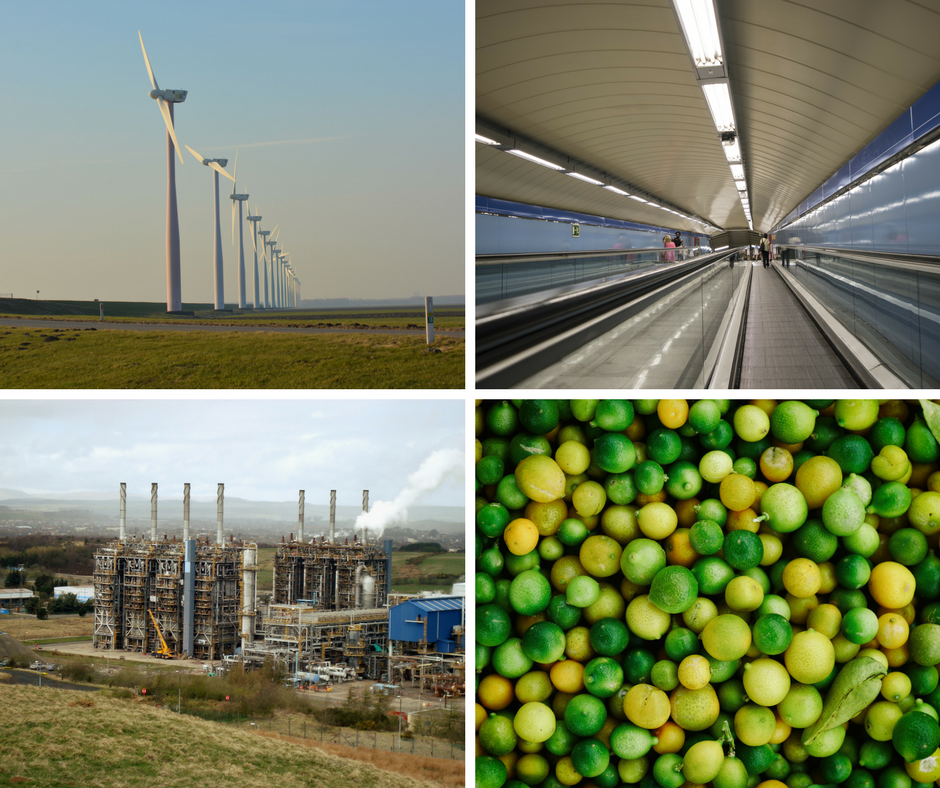

Condition monitoring is hot right now. Whether it’s large multinational companies or local manufacturing businesses, everyone seems to be talking about condition monitoring and what it could mean for their productivity levels. One of the main reasons is because condition monitoring could decrease production and maintenance costs in virtually any sector. To illustrate how global this phenomenon really is, we’ve made a list of the top 6 applications of condition monitoring:
Green Energy
As the global economy attempts desperately to shift away from its fossil-fuel dependency, companies have become more and more concerned with developing sustainable technologies and utilizing condition monitoring. This is applicable to hydroelectric energy and solar energy but is perhaps most crucial when considering wind turbines. Most wind turbines produce around two thirds of their electricity yield in wintertime, making them seasonally dependent on the period between November and April. Mechanical failures during these months can therefore be detrimental to the overall electrical output. Furthermore, maintenance costs are generally higher during the winter, which aggravates the situation even more. Check out the Sensor-Works website for more information on the effects of condition monitoring on wind turbines.
Food Manufacturing
Maintenance costs in the food and beverage industry can lead to a staggering 15-20 % increase in production costs. This problem is exacerbated by the perishable nature of most food products. Condition monitoring can help to assess product quality and can control key elements like temperature, humidity, ethanol-levels, contaminations, and vibrations. The problem of food wastage has become such an omnipresent issue that even the EU have begun funding for condition monitoring systems that will prevent wastage and ensure standards are met.
Petrochemical/Oil Companies
Most of these companies operate on a 24/7 basis and are therefore hard hit by damages and maintenance. When it comes to the reliability of turbines, compressors, motors, generators, and other machinery, manual measurements and estimates just don’t cut it. Furthermore, the remote nature of many offshore refineries also necessitates careful planning and accurate monitoring capabilities, which can improve safety, decrease environmental risks, and optimise plant efficiency.
IBM Systems
With a global revenue of just under £60 billion, IBM has cemented itself as one of the major players of the 21st century. Condition monitoring is a big part of IBM’s service, as it combines a powerful data analysis engine with fluid management systems. This helps IBM paint an accurate and reliable picture of how, when, and where assets fail.
Military
When it comes to weaponry, high-performance equipment, and armoured vehicles, reliability and ease of use are key. Military equipment is often monitored 24/7 to ensure safe and speedy deployment possibilities, and invests heavily in state-of-the-art condition monitoring systems.
Transport
Modern day commuters are all too aware of the economic cost of transport delays and maintenance issues. Some analysts even predict that heavy snow days can cost the UK upwards of £500 million a day. Add to this the cost of unexpected damages and breakdowns and the whole economy, let alone the transport industry, could suffer.
Effective transport services are therefore incredibly reliant on condition monitoring, as this is often the only way to ensure that these machines and vehicles can be used safely and reliably every single day.
Sensor-Works:
For more information, check out our blog on the main benefits of condition monitoring or visit our website.