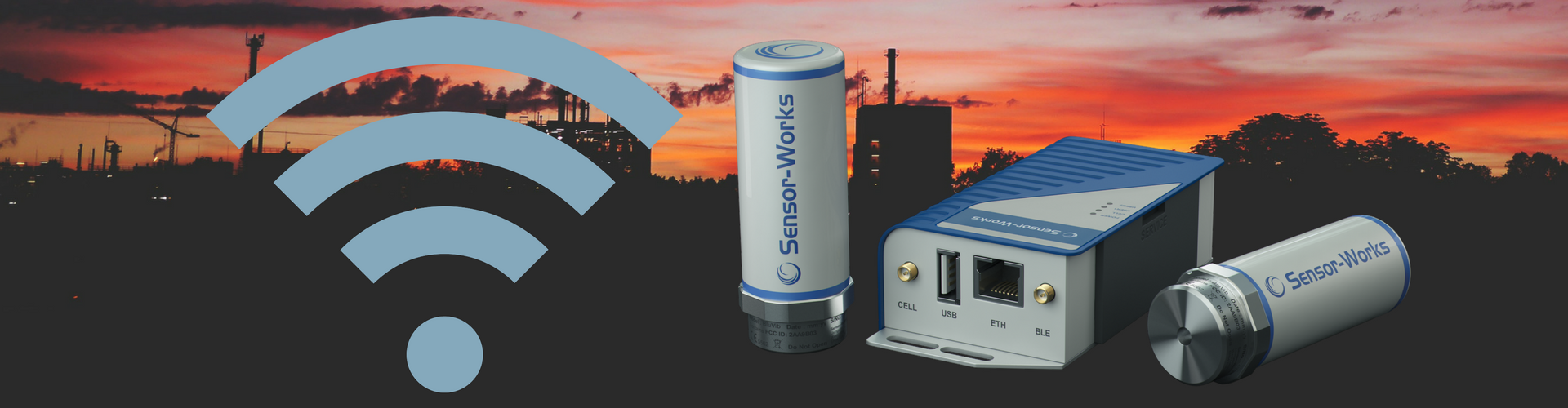

Looking at a Condition Monitoring System?
Recently, there’s been a lot of talk about heavyweight companies from all sorts of sectors turning to a condition monitoring system as a way of cutting costs and extending the lifespan of their machinery. But, as with many hot media topics, the focus has mostly been on the benefits of condition monitoring systems, with success stories of shrinking maintenance costs and reduced machine downtime overshadowing some of the finer, more tangible questions, like installation costs and upkeep. That’s why we’re here to answer that all-important question: is condition monitoring expensive and is it worth it? Read on for our thoughts on this complicated matter.
Risk Avoidance:
To start with, it must be noted that the cost of condition monitoring systems should always be viewed in relation to potential losses from broken machinery suffered without these systems in place. In other words, what’s the ROI of predictive maintenance and what are its effects on your manufacturing process?
A good way to assess the cost-efficiency of a condition monitoring system is to conduct an annual risk assessment. To calculate this, add up the total sum of production losses, labour costs, and replacement costs for anyone specific breakdown or failure – say a major compressor failure – and determine how frequently this kind of failure takes place. If we suppose that the downtime and maintenance costs equal roughly £200,000, with the compressor failure taking place every 4 years (on average), then your annual risk for that particular type of failure is approximately £50,000 per year. When you add up all these potential costs for all possible failures, you get a basic overview of what you stand to spend on maintenance costs without predictive maintenance systems in place. Be warned, however: this figure could be depressing…
There are more (accurate) ways to determine whether the ROI on a condition monitoring system warrants the initial investment, but these quick-fire calculations and considerations can help give you a brief idea of whether your business could benefit from predictive maintenance and whether this is a good investment strategy.
For example, if you’re one of the lucky few that happen to work with ultra-stable machinery that never fails (wishful thinking, we know), then condition monitoring may prove slightly expensive for the potential ROI. Make sure to seek advice from a trusted supplier of condition monitoring sensors for an accurate determination of the implications these systems can have on your maintenance costs. We can pretty much guarantee, however, that predictive maintenance is a fool-proof investment for most large-scale, machine-based industries.
Initial Costs:
It is only once you’ve managed to establish the potential savings of a condition monitoring system that you can start to accurately judge the weight of the initial installation costs. Normally, these pale in comparison to the steep annual risk figures that most companies are faced with. Especially for industries in remote locations, like oil rigs or petrochemical companies, the sheer downtime costs or safety implications for machinery breakdown alone completely overshadow any set-up costs.
Remember that these costs vary per industry and per company, so once again, we recommend speaking to an expert about this for a clearer indication of what impact this has on your business.
Condition Monitoring Systems Are An Investment:
With all these considerations in mind, we feel that condition monitoring is an excellent investment that more than justifies any initial or running costs. As such, we wouldn’t call it a particularly expensive technology, especially when viewing it as a long-term investment. These systems allow your business to grow safely and cost-efficiently, without the far-reaching drawbacks and ramifications of faulty machinery, broken components, and archaic equipment.
It’s no wonder that this development has been heralded by many as one of the biggest technological advancements of the modern era, with potential savings for manufacturing companies in the UK alone reaching into the hundreds of billions of pounds. In combination with powerful real-time analytics and AI systems, condition monitoring has set a new standard for the way we produce and manufacture goods and may even become an industry standard, with some governments and supra-national bodies campaigning to set safety regulations based on these very principles.
In the meantime, however, it remains an astute and cost-effective way to monitor machinery and avoid large-scale failures. For more information, contact Sensor-Works, a global industry leader in condition monitoring systems.